Jetstream2 AI-Pilot Fellowship
U of A College of Information Science
Dr. Jennifer De La Rosa

Expert in Chronic Pain and Mental Health: Specializes in treatment quality, stigma, and health equity in chronic pain, substance use, and mental health.
Leadership in Advocacy: Director of Strategy for the Comprehensive Center for Pain and Addiction and member of the U.S. Association for the Study of Pain Advocacy Committee and Leadership Academy.
Accomplished Researcher: Recognized for impactful research, including an Editorโs Choice publication in PAIN.
Workforce Development Leader: PI of PeerWORKS, training opioid-impacted individuals, and evaluator for AzCANN, providing cannabis education.
The problem:

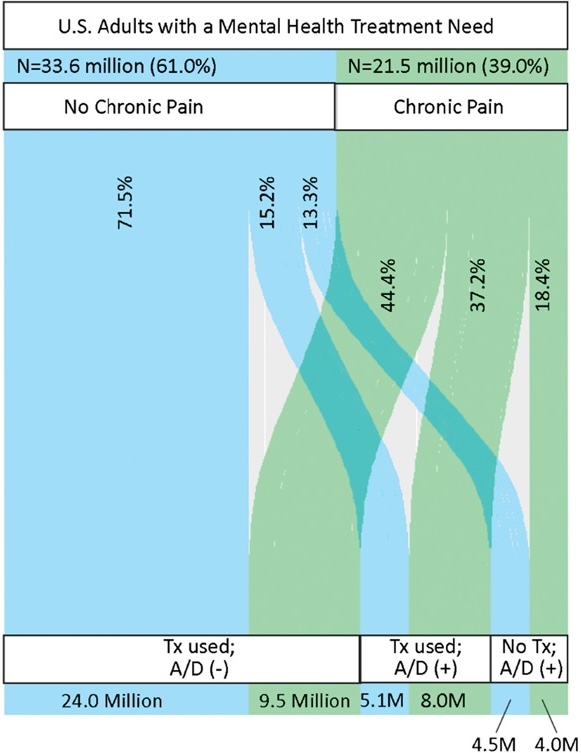
Chronic pain (CP) patients = significant barriers to mental health care
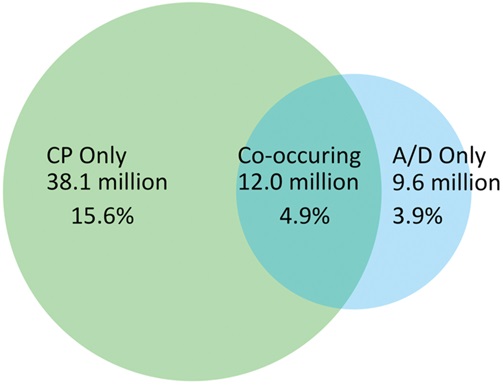
Anxiety and depression symptoms often co-occur with CP
Service Utilization Challenges:

Services are underutilized and fragmented, resulting in poorer outcomes.
Significance
Prevalence: High rates of co-occurrence between CP, anxiety, and depression.
Functional Impact: Disruptions in daily life and increased healthcare burdens.
Call to Action
Leverage AI to analyze patient journeys, uncover disparities, and inform impactful interventions.
Early Sepsis Prediction: Ensemble CNNs, LSTMs, and Transformer models to predict sepsis onset from time-series data, more accurate than traditional methods. Srivinas et al., 2024 JES
Glucose Prediction: Hybrid Transformer-LSTM model predicts blood glucose levels with more precision than standard approaches. Bian et al., 2024 PLOS
COVID-19 Impact Prediction: Assessment and comparison of LSTM networks and LSTM-CNN combinations to Transformer models with self-attention mechanisms for predicting COVID-19 impacts, with CNN-LSTM-based models outperforming others. Bharadi et al., 2023 IEEE Xplore
Targeting Care Gaps in Specific Comorbidities: Uniquely focuses on predicting care gaps in patients with comorbid anxiety, depression, and chronic pain, a critical area with documented unmet needs. ScienceDaily
Ensemble Modeling of Patient Pathways: Applying an ensemble of LSTM and Transformer models to model patient pathways in this specific patient group is a novel approach, leveraging the strengths of both architectures to capture complex temporal patterns and interactions.
Proactive Intervention Potential: By predicting care gaps, we aim to enable healthcare providers to intervene proactively, potentially improving patient outcomes and optimizing resource allocation in managing chronic conditions with psychological comorbidities.
Develop an AI-assisted tool to map and analyze patient journeys, focusing on individuals with CP, anxiety, and depression.
Highlight mental health service utilization patterns and disparities.
Advance AI with a novel ensemble model of LSTMs and Transformers.
Provide actionable insights to improve accessibility and efficacy of mental health interventions.
LSTMs: Capture short-term utilization patterns.
Transformers: Extract long-term trends and dependencies.
Combines strengths of LSTMs and Transformers.
Identifies archetypal patient pathways for actionable insights.

Focus: Critical care patients in ICU settings.
Population: Data from the Beth Israel Deaconess Medical Center
Limitations: Skewed toward critically ill patients and limited diversity in patient demographics.
Strengths:
High granularity for ICU events.
Rich time-series data for vitals, labs, medications, and clinical notes.

Focus: Broad population-level data across various healthcare settings.
Population: Over 1 million diverse participants = comprehensive demographic and geographic representation
Limitations: Data may have inconsistencies in granularity and standardization across health systems.
Strengths:
Longitudinal data capturing routine care, chronic conditions, and diverse health behaviors.
Includes survey data (e.g., social determinants, health behaviors) that contextualize clinical data.
Data Preprocessing:
Model Development:
Clustering:
Stakeholder Collaboration:
Months 1โ2: Data preparation, stakeholder consultations, computing setup.
Months 3โ4: Develop LSTM and Transformer models; initial analyses.
Months 5โ6: Apply ensemble models, analyze pathways, validate models.
Month 7: Implement LIME, stakeholder review, and feedback integration.
Months 8โ9: Finalize analyses, prepare dissemination materials, stakeholder meetings.
920 CPU hours (preprocessing and clustering).
770 GPU hours (model training and validation).
Total: ~12,470 compute units.
1TB HIPAA-compliant storage (overestimation):
500GB raw data.
200GB preprocessed data.
200GB model outputs.
100GB results and documentation.
Identify gaps and barriers in mental health service utilization.
Guide policymakers and healthcare providers to improve care.
Develop a novel ensemble model for complex health data.
Provide interpretable AI tools for practical applications.